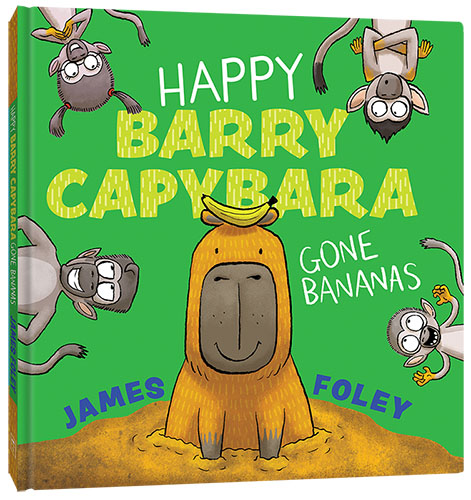
James Foley makes children’s books for children who read books. If you’re a child and you’re eating his books, you’re doing it wrong. His books include the multi-award winning Stellarphant, Brobot, Chickensaurus, Bigfoot vs Yeti, Happy Barry Capybara and Oh No! James lives in Perth with his wife Renae Hayward (also an author), 2 kids (wannabe authors), and a labrador (not an author). He is a massive Marvel movie nerd and comes from a long line of queuing enthusiasts. Follow him on socials ( @jamesfoleybooks ) or at www.jamesfoley.com.au .
The Maitland-Newcastle Diocese has decided to restructure its 58 schools, saying it will redeploy its teacher-librarians or make them redundant.
This is a whoppingly-bad addition to an already worrying trend around Australia, where bean-counters treat the existence of trained TLs as an optional luxury.
With literacy rates falling, and misinformation and AI on the rise, we need TLs in schools more than ever.
Click the instagram post above to watch me taking the mickey.
And please sign the petition to save our teacher librarians!
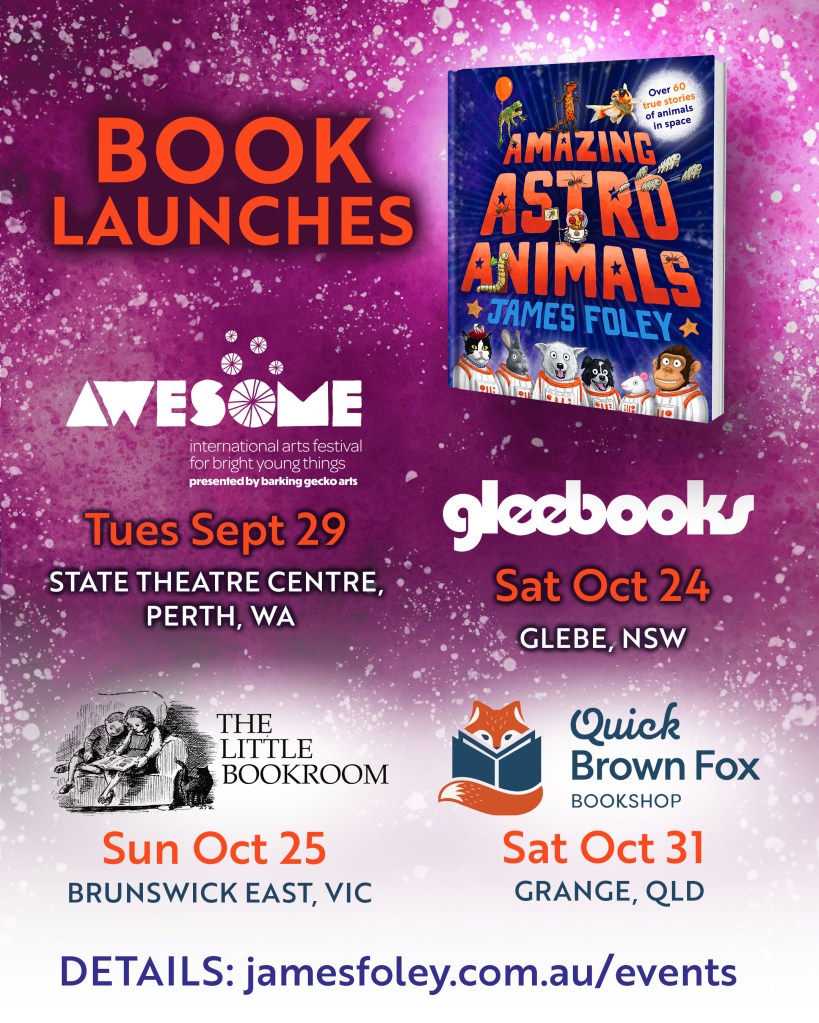
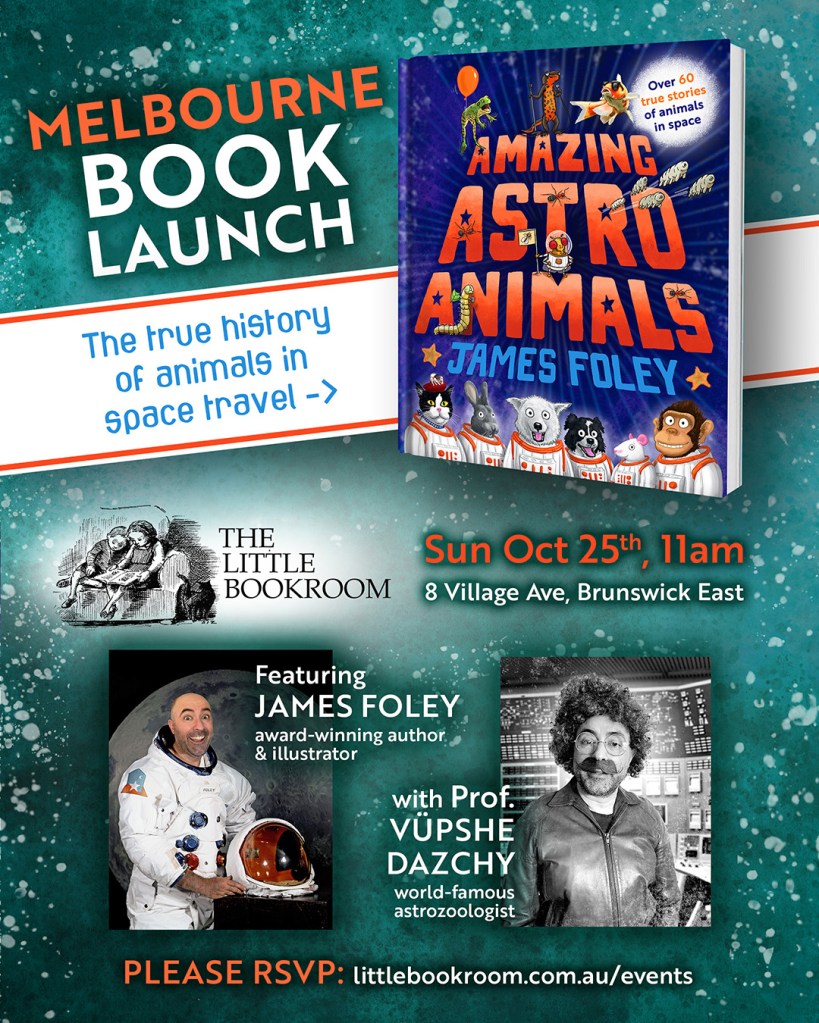
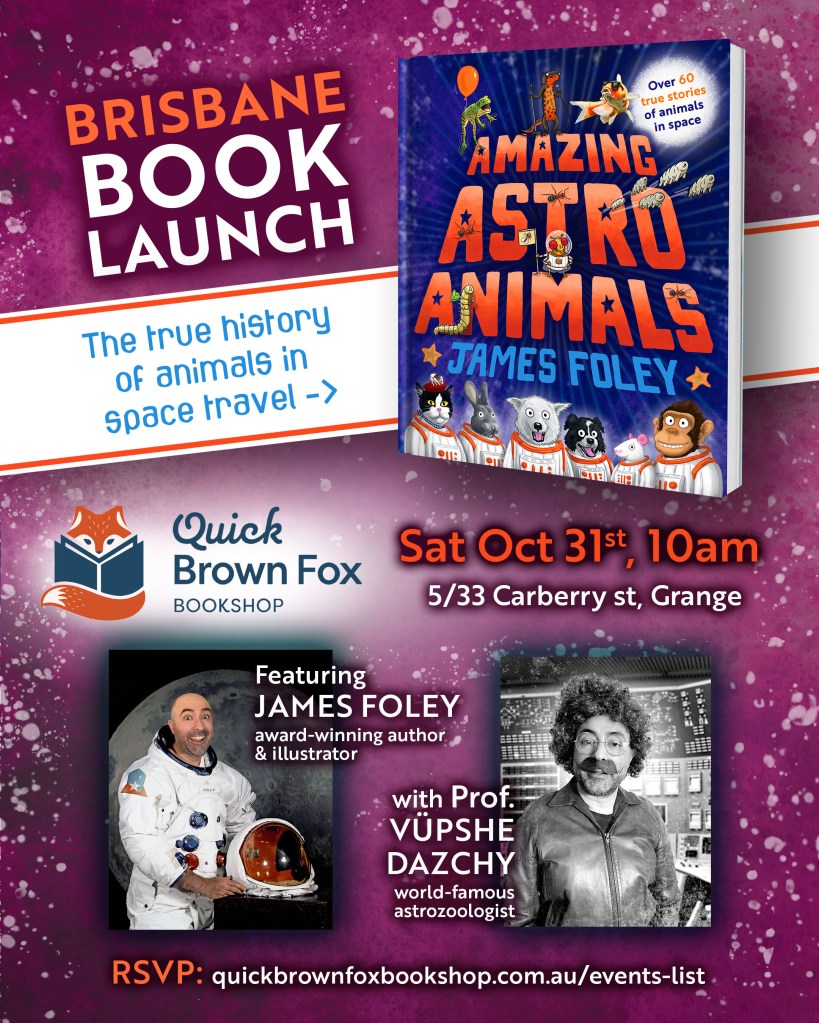
Join me for a book launch in Perth, Sydney, Melbourne or Brisbane.
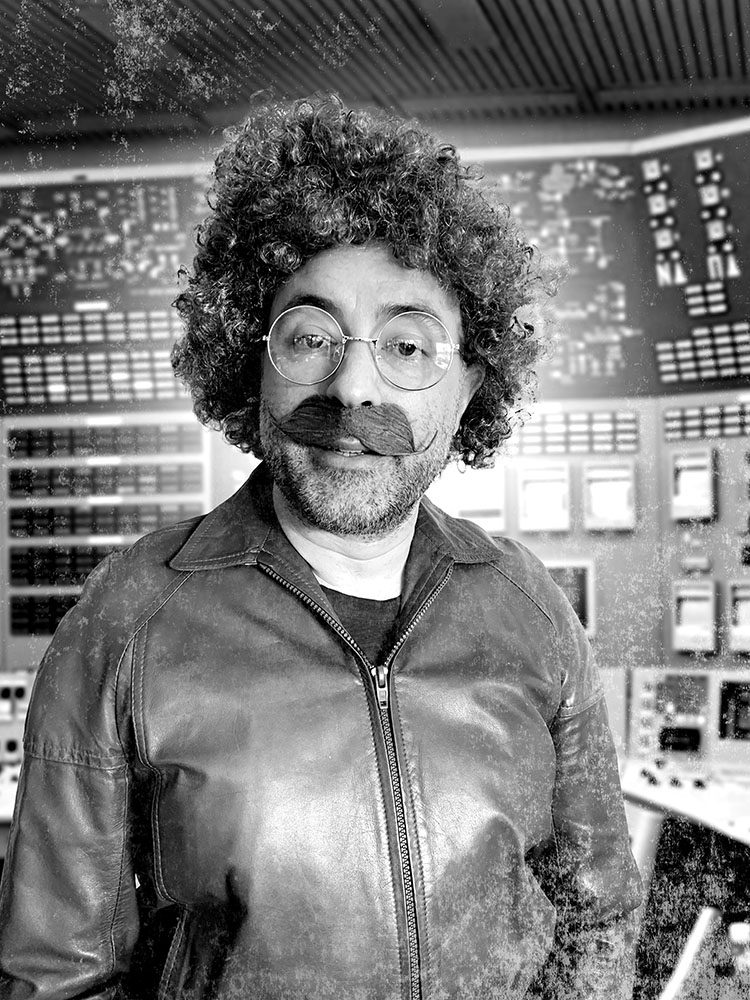
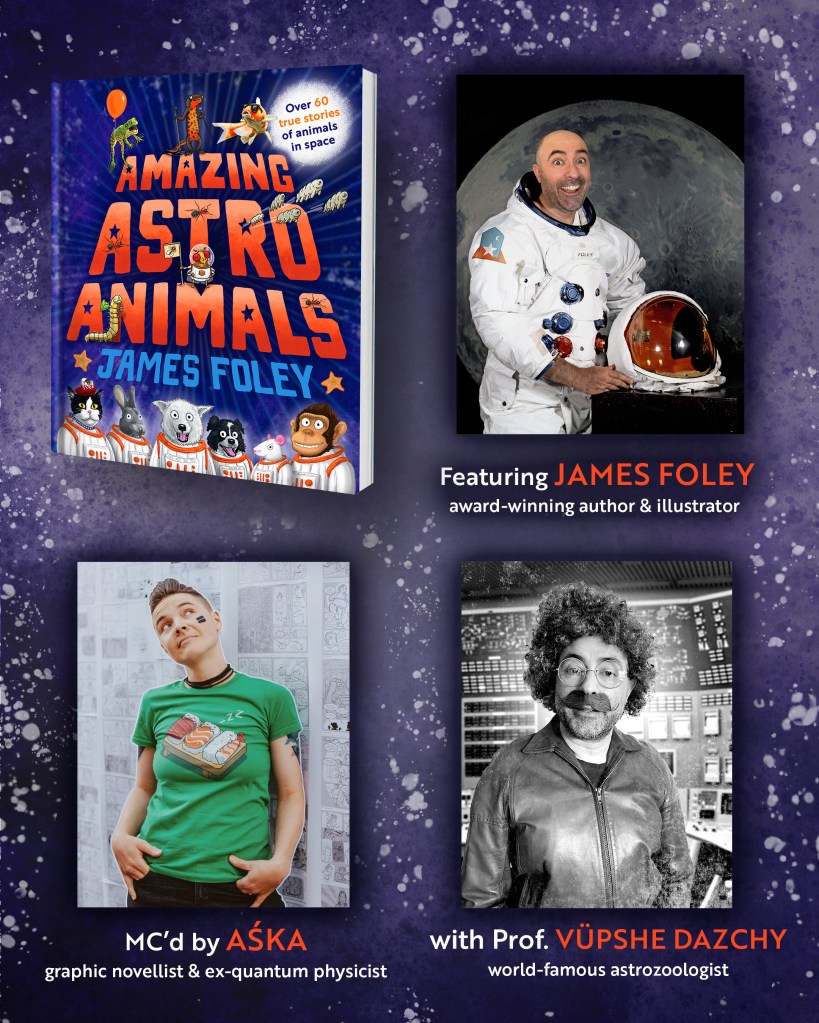
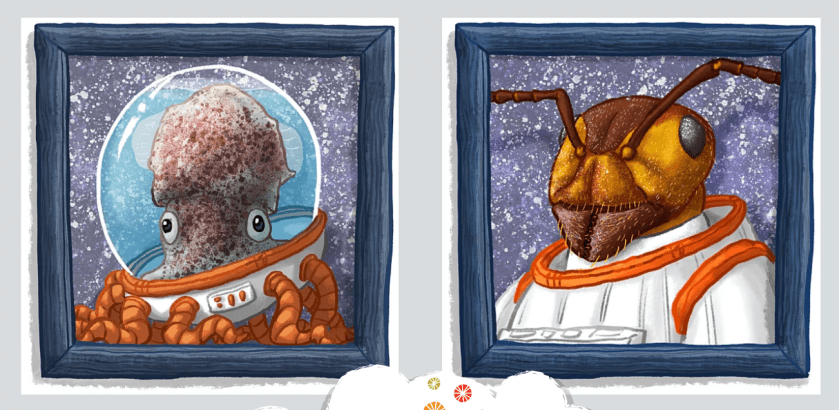
Each launch will include a short lecture by renowned astrozoologist Professor Vüpshe Dazchy.
Professor Vüpshe Dazchy, seen here at the Baikonur Cosmodrome (Космодром Байконур) on the 1st of April 1973, shortly before he sent his own tapeworm to space
PERTH, SEPT 29
DATE: Tuesday Sept 29th WHEN: 2:00pm WHERE: Heath Ledger Theatre, WA State Theatre Centre TICKETS: $5 – get your tickets here
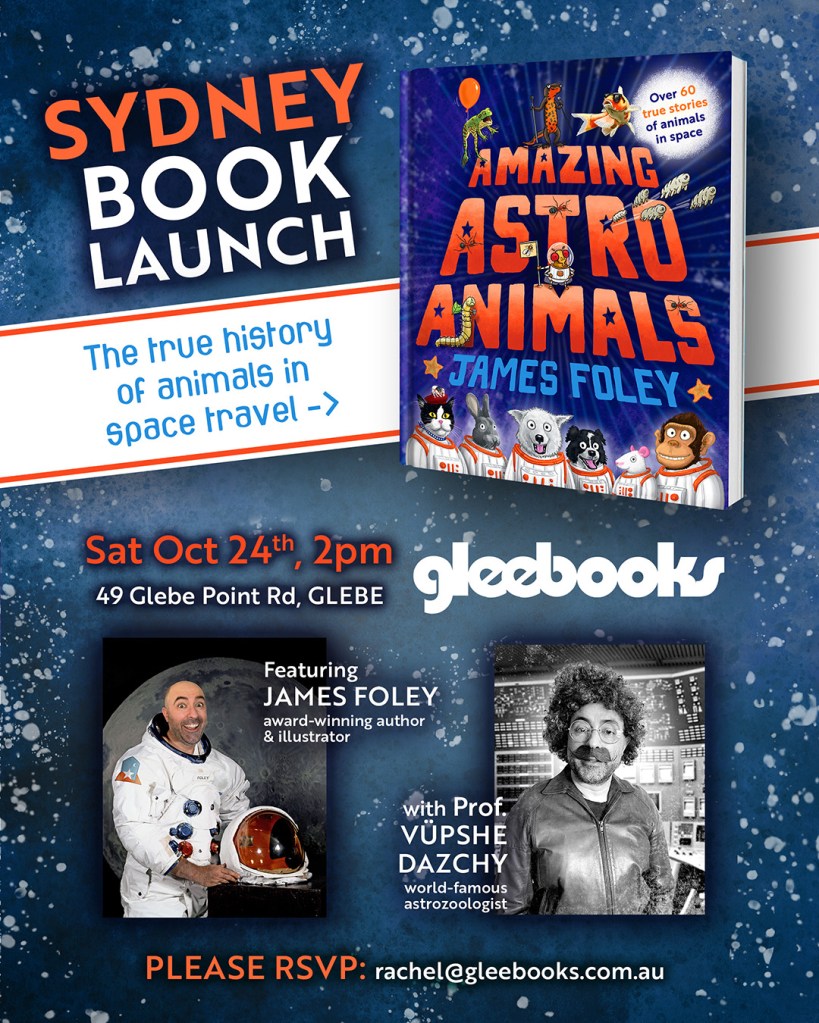
SYDNEY, OCT 24
DATE: Saturday October 24th WHEN: 2pm WHERE: Gleebooks, Glebe Point Rd, Glebe RSVP: Rachel@gleebooks.com.au
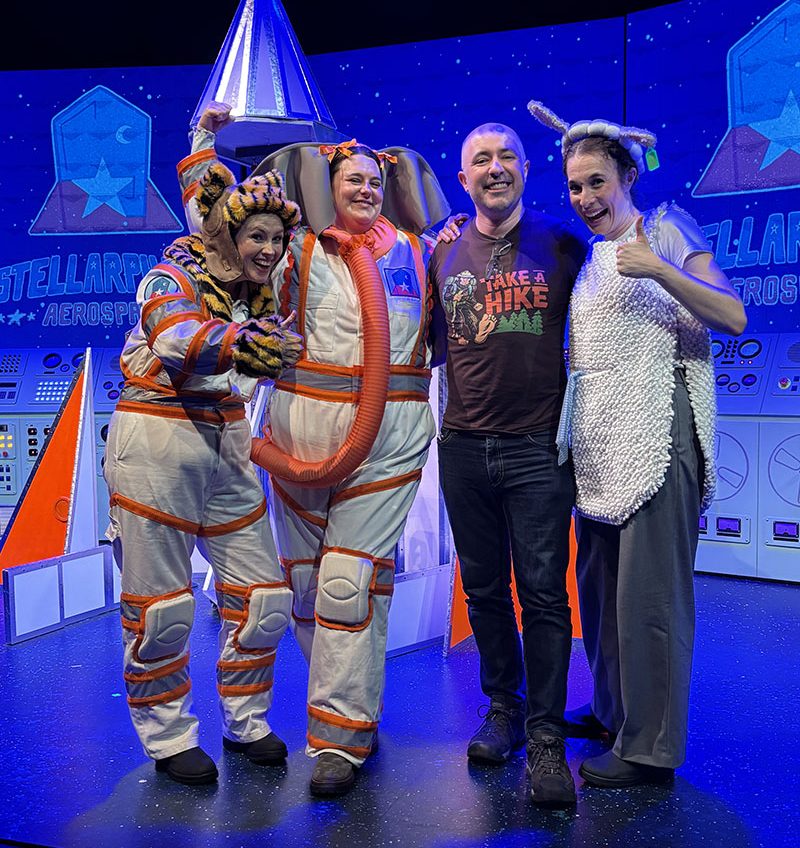
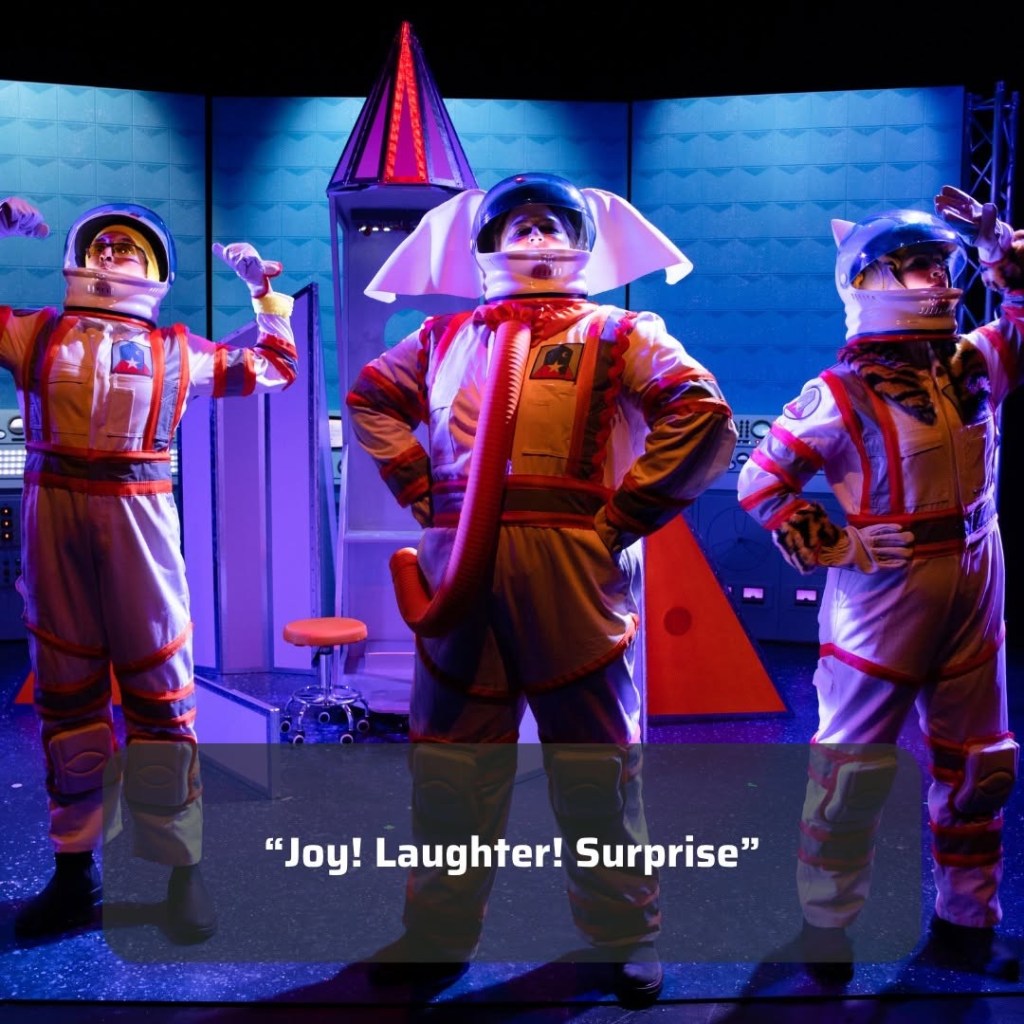
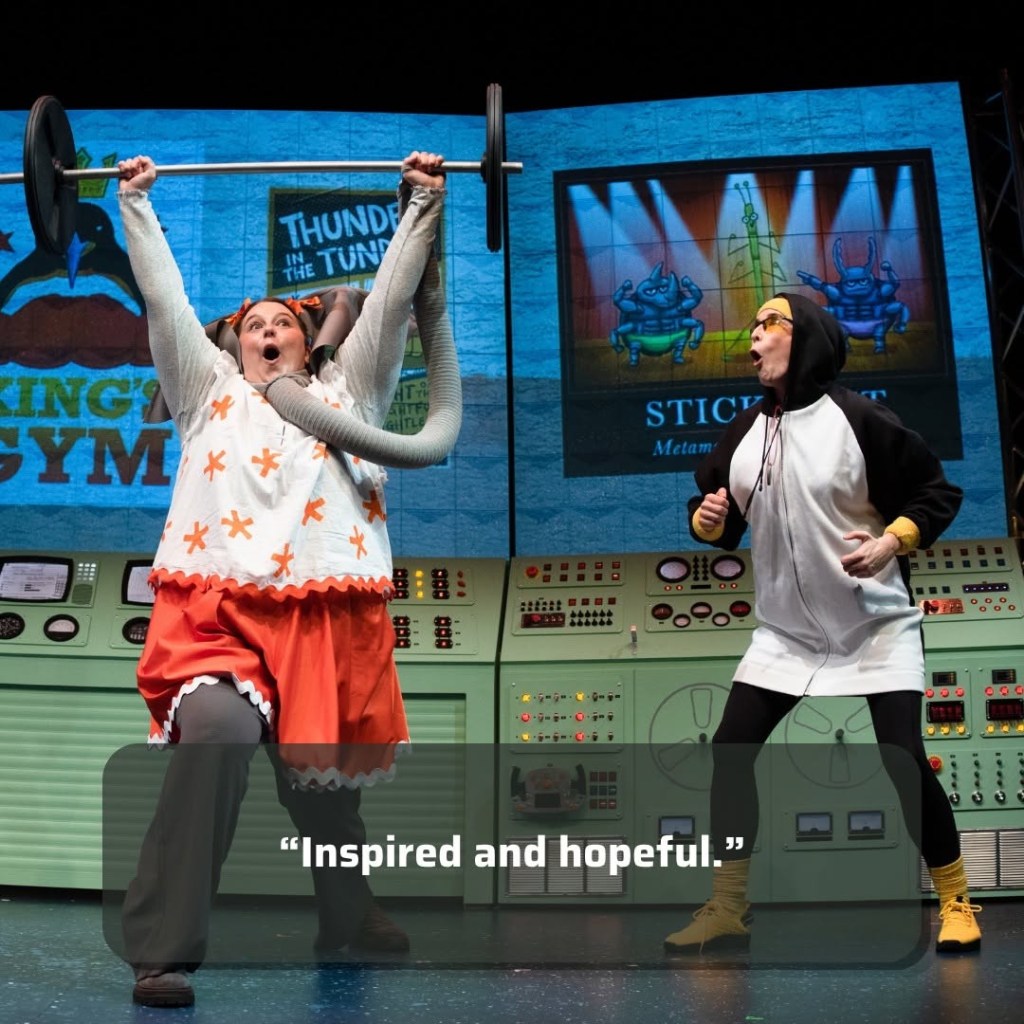
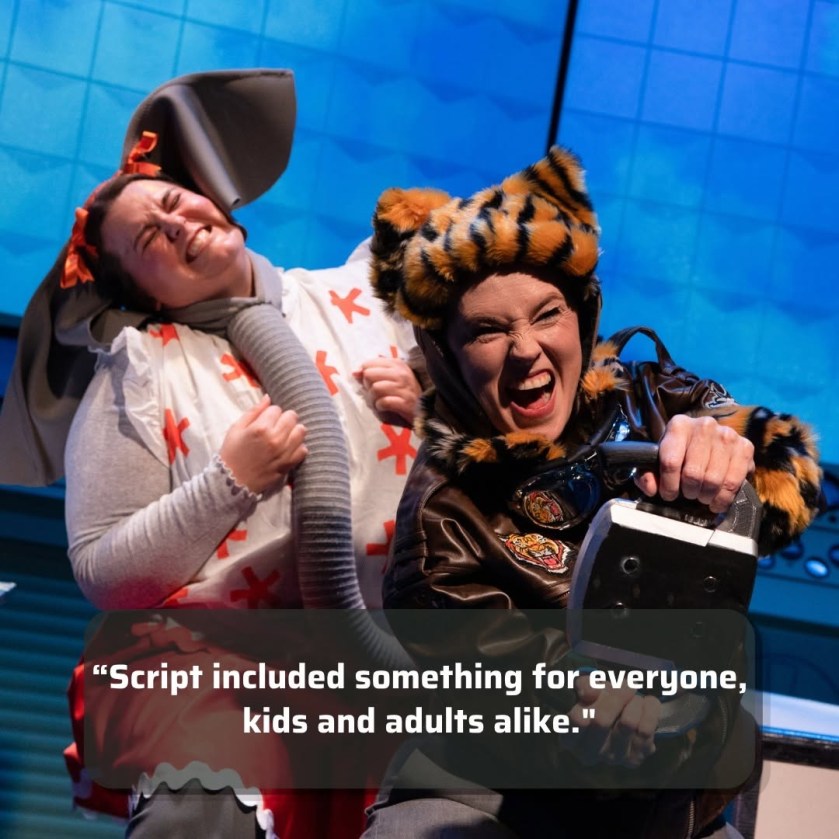
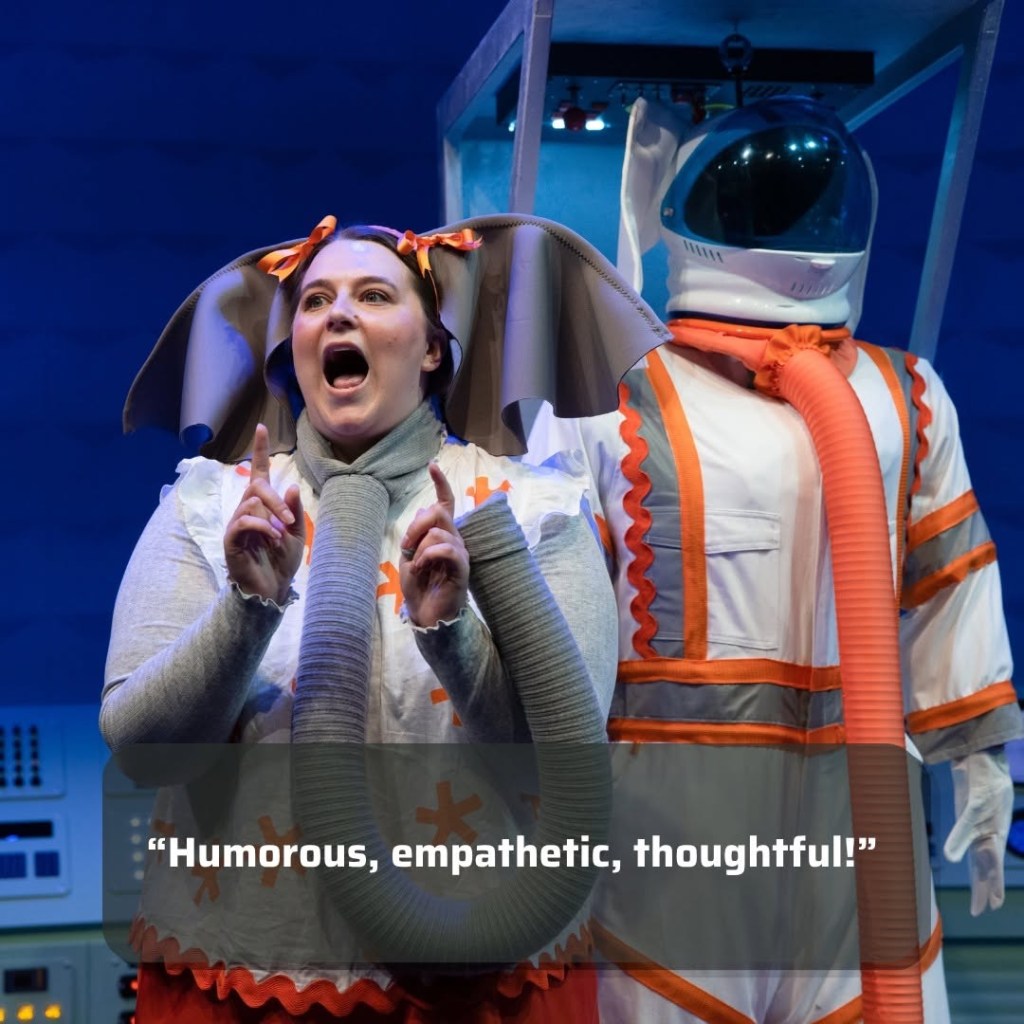
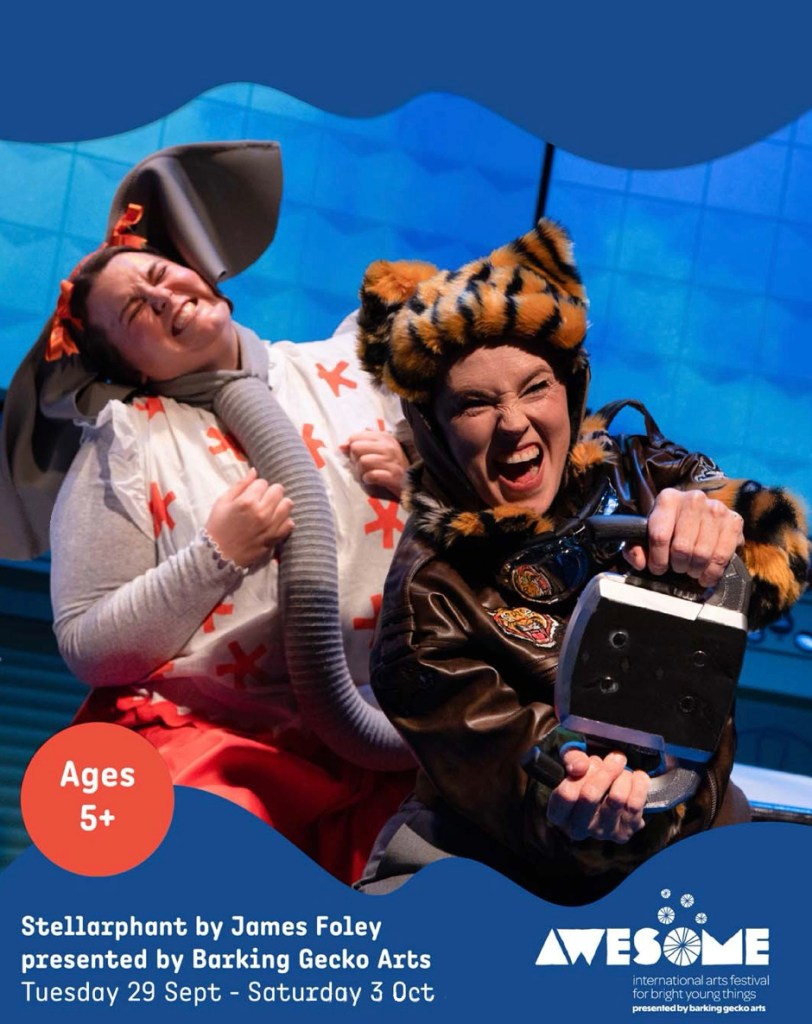
Barking Gecko Arts’ incredible stage adaptation of Stellarphant is back for a limited run this school holidays!
If you missed it back in May, now’s your chance. It’s got the original cast and creative team, which means you’re in for a treat – they really knocked this out of the park!
Stellarphant is on at the State Theatre Centre from Tuesday September 29 to Saturday 3rd October. Tickets are only $10 and you can book your seats here.
There’s even an Auslan-interpreted session on Thursday 1st October at 11am.
I’m launching my new non-fiction book Amazing Astro Animals on Tuesday Sept 29th at 2pm – that’s right after the 1pm Stellarphant show. Why not grab tickets for both??
Perth’s Awesome Festival is coming up, and I’ve got a bunch of events on!
Plus, book launches for Amazing Astro Animals! LET’S DO THIS!!
PERTH, Sept 29-Oct 3: STELLARPHANT STAGE SHOW
The incredible stage show of Stellarphant is back as part of this year’s Awesome Festival! If you missed it back in May, now’s your chance.
Full of laughter, heart and imagination, Stellarphant takes audiences on a cosmic adventure about determination, equality and following your dreams. Adapted for the stage by Clare Testoni, this uplifting production reminds us that heroes come in all shapes, sizes and species.
DATE: Sept 29 – Oct 3 WHEN: various times WHERE: Heath Ledger Theatre, WA State Theatre Centre, Perth TICKETS: $10. Get your tickets here.
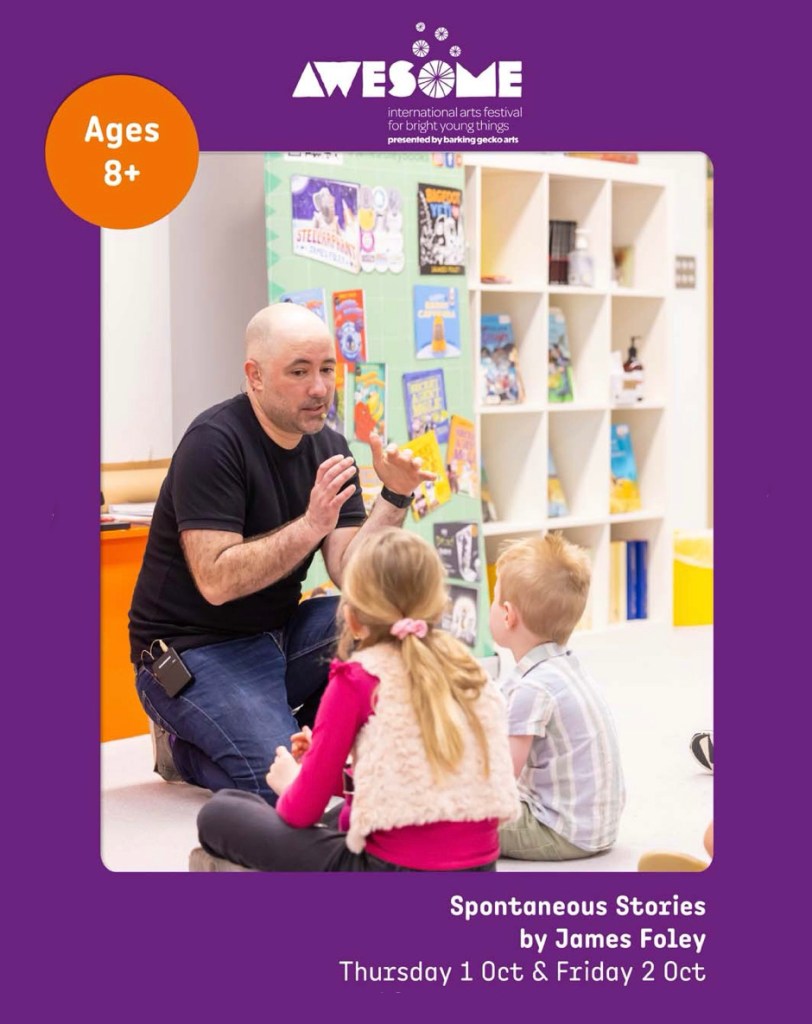
Join me for a laugh-out-loud session where the kids are in charge.
Bring your weirdest and wackiest ideas for stories, because I’ll mash them into the funniest Franken-tale you’ve ever heard — which I’ll also illustrate, live!
Suitable for ages eight and up.
DATE: Thurs October 1st, Fri October 2nd WHEN: 10-11am, 12-1pm WHERE: State Library of WA TICKETS: $10 for kids; free for their adults – get your tickets here
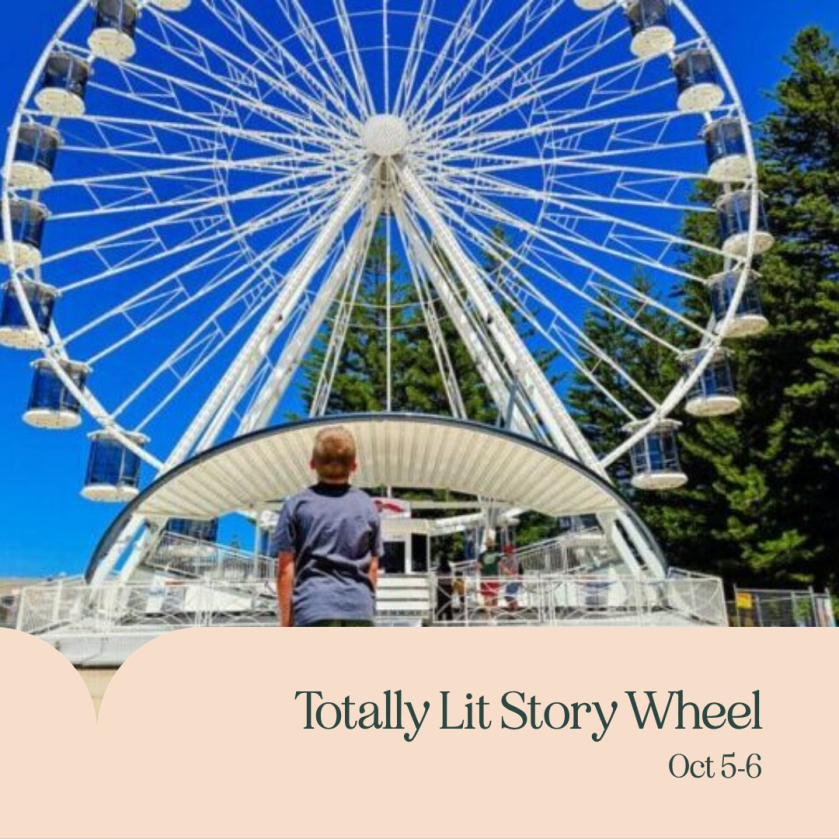
Climb aboard the Story Wheel (aka the Fremantle Esplanade ferris wheel) and treat the young people in your life to their own private 10-minute story time experience with one of WA’s leading writers for children.
Day 1 (Oct 5th): – Jeanette Stampone (10-11am), – Gabriel Evans (11-12pm, 1-2pm), – Deb Fitzpatrick (12-1pm).
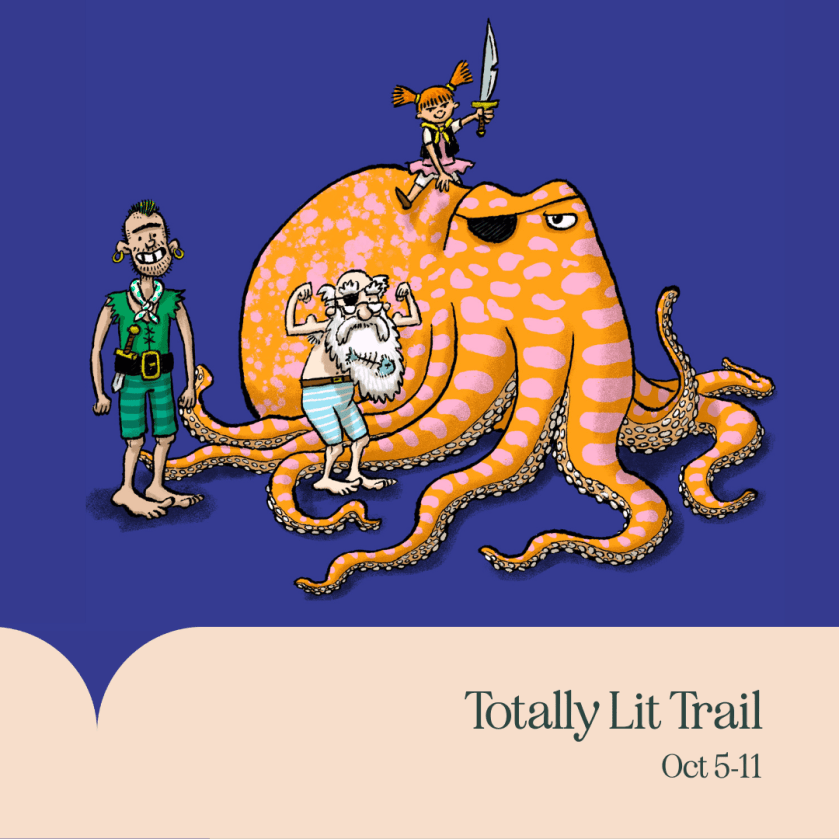
Our pirates – Hector, Captain, Stringbean, Jerry Hattrick, Pearl and Puss – are having lots of adventures in the Port City.
Follow the map to track down what this pirate crew is getting up to.
Start your own adventure at Fremantle Town Hall where you’ll be able to collect your Totally Lit Trail Map and then follow the map through the city to find pirate treasure. Every stop on the journey unlocks one of six pieces in the story.
Presented by City of Fremantle and Totally Lit. Artwork created by James Foley.
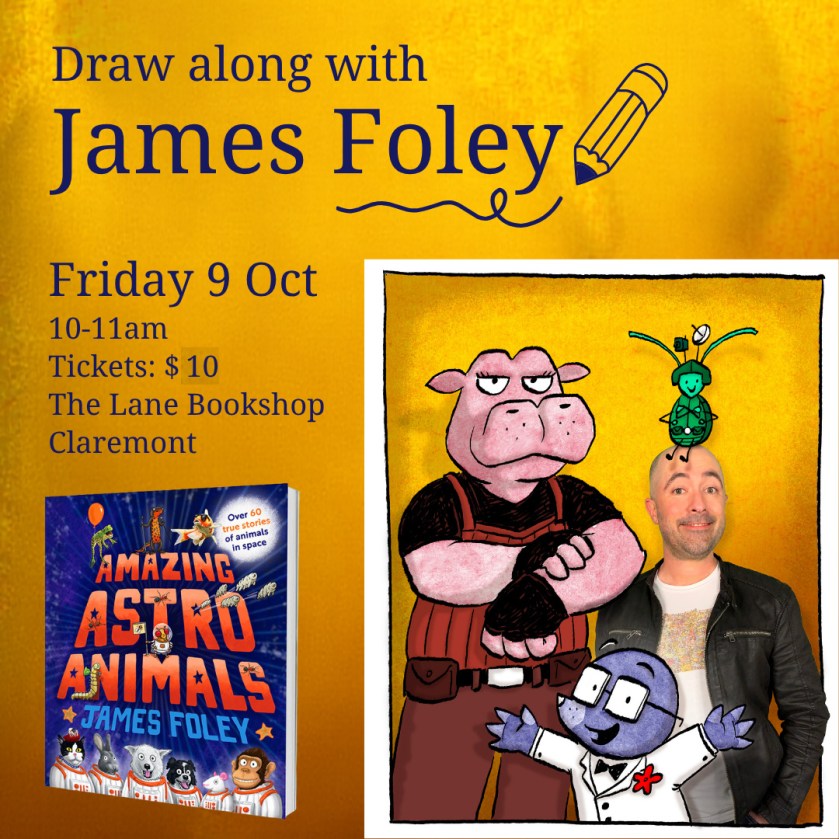
See off the school holidays in artistic style by joining James Foley for a draw-along.
DATE: Friday 10th September WHEN: 10am – 11am WHERE: The Lane Bookshop TICKETS: general admission $10.00; ‘Book Lover’ $35.00 (includes admission and a hardback copy of Amazing Astro Animals by James Foley, RRP $34.99)
Please note, parents and carers do not need to buy a ticket if they are attending with children.
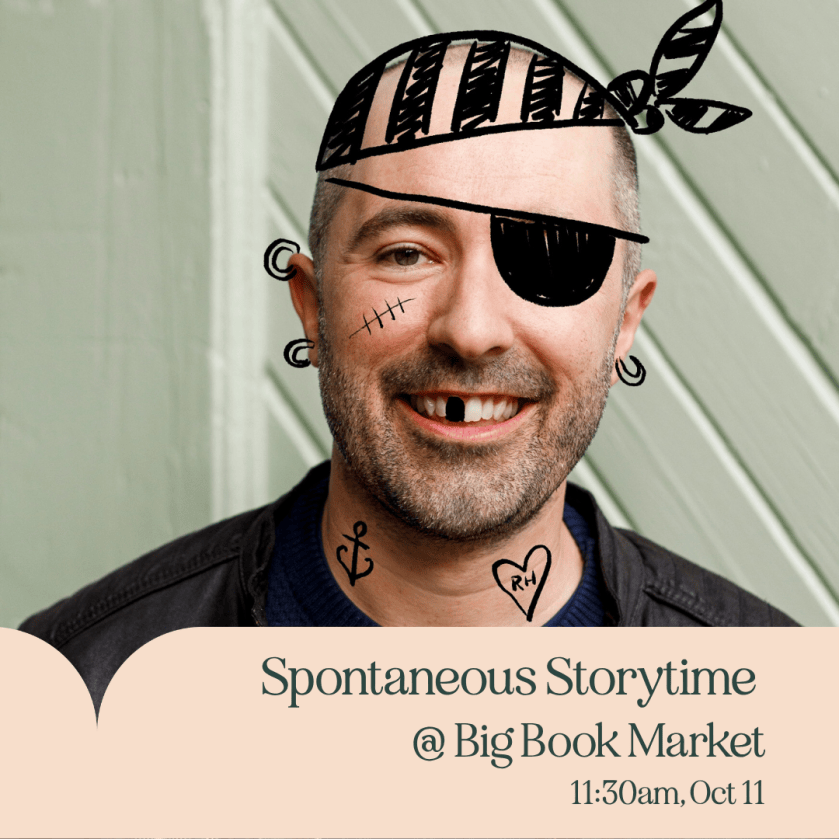
FREMANTLE, Oct 11: SPONTANEOUS STORYTIME @the big book market
On Sunday, 11 October, Fremantle/Walyalup will host the Big Book Market – an opportunity for book lovers of all interests to discover new titles and great bargains.
This is a free, all ages event.
The day will also include live sessions: 11.30am-12.30pm: James Foley – a story time and live illustration challenge featuring the pirate crew from the Totally Lit Trail. 1.00-2.00pm: Peter Murphy and Fred Rhea – live music and storytelling inspired by their book, Fremantle to Freedom. 2.30-3.15pm: Poetry readings, details TBC
Things to note: – Live presentations will take place in front of the sloping grassed area in Walyalup Koort – so why not pack a picnic, bring a blanket and settle in for a few hours? – In the event of bad weather the Market and live events will relocate indoors to Fremantle Town Hall.
Presented in Walyalup Koort thanks to City of Fremantle
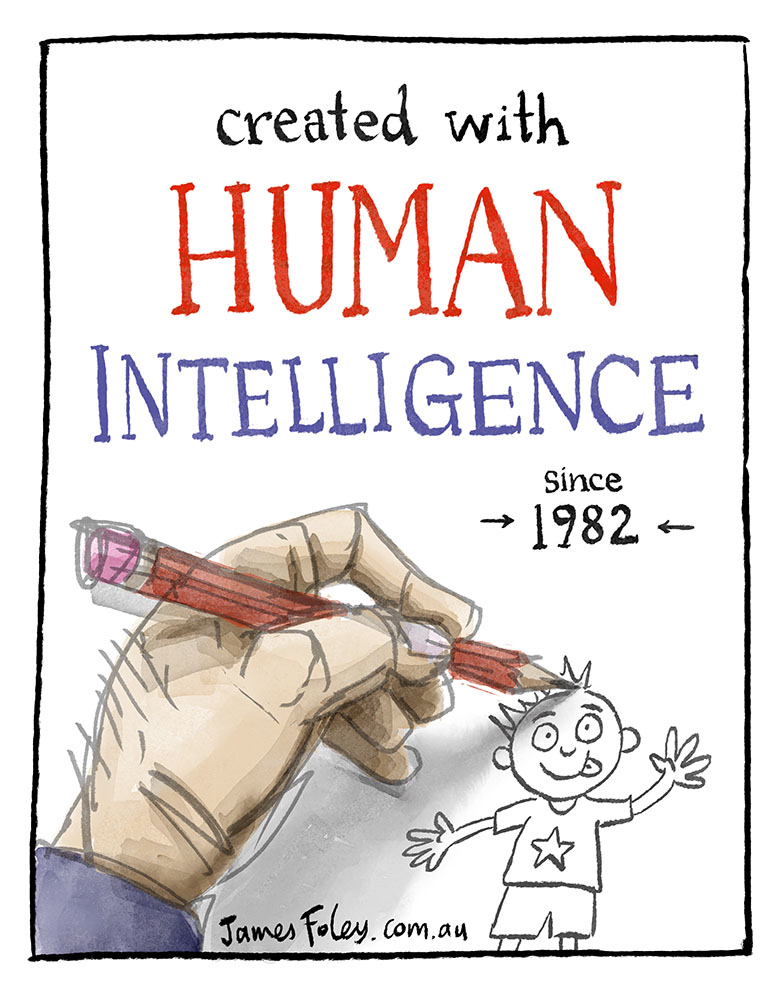
I just came across a wonderful grassroots campaign from 2024, started by an illustrator called Beth Spencer. In response to the beginnings of generative AI, she designed a logo with the words ‘Created With Human Intelligence’. Here’s her piece:
She invited people to draw the logo in their style. So I had a go and made this:
I’ve never used generative AI for any of my books, and I don’t plan on ever doing so. Why would I deprive myself of the fun and the challenge of making something from scratch?
Beth’s positive, community-centred logo was just what I needed to see this week; like me, you may have noticed the recent, rapid rise of generative AI across the creative industries. Writing, art, film and music have all been affected.
As just one example, the number one song in Australia for the past four weeks – a cover version of Madonna’s Like A Virgin – uses an artificially generated singer. This was not disclosed until investigative journalism and public backlash forced the cover’s ‘creator’ to add AI credits to the song on Spotify.
My facebook feed has also been awash with generic AI-generated, self-published picture books. People who can’t (or won’t) draw, and can’t (or won’t) pay for an illustrator, are producing books full of characters with wonky eye contact, stiff body language and a distinct lack of soul.
A school I visited recently was excited to show me the picture books that their year 6s had written and illustrated for their year 2s. However the images were entirely generated by AI as they ‘only had two weeks to complete the books’. I would argue that this was enough time to draw pictures for a picture book. I would add that the decision to use generative AI deprived the students of an opportunity to learn and grow. Did the teachers inform the students that generative AI is built on stolen art? Or did they omit that from their lessons? (Or were the teachers completely unaware of this fact?)
I recently came across a new Australian picture book press that is open about its use of generative AI in its illustration. The press’ website claims that “there is still room, in a world of fast publishing, for books made the old way: slowly, deliberately, by one pair of hands”. This short sentence is wildly misleading because:
mainstream publishing is notorious for being the opposite of fast;
using generative AI is not ‘the old way’;
mainstream publishing has always involved more than one pair of hands (writer, illustrator, editor, designer, printer, marketer, distributor, bookseller, librarian, reader, to name a few);
typing prompts into chatGPT does not constitute making things by hand; and
generative AI is built off the stolen work of millions of creatives, so is emphatically not the work of ‘one pair of hands’.
It’s almost as if the text on the press’ website was not written by a human being who could think things through logically to ensure they made sense, but was instead simply pooped from the butt of generative AI.
And apart from these serious and disastrous effects, it has the added impact of disconnecting us from our creativity, and thus our humanity. I don’t mean that in some airy-fairy woo-woo way. I mean it quite literally; enduring the creative process is an integral part of being human, and generative AI deprives us of the struggle, the failure, and the psychological and emotional growth that comes from trying to make something from scratch. ‘Creativity’ at the touch of a button isn’t creativity at all.
It seems the only benefit of generative AI is money … for some. If people don’t have to pay artists, then they save money. If techbros can survive the genAI economic bubble, then maybe they’ll have billions of dollars waiting for them on the other side.
it is encouraging to hear that the Australian government has pledged to protect the copyright of creators and stand up to the AI companies. Prime Minister Anthony Albanese said in a recent speech that:
“An artist’s creative endeavour is their work and their property. No company should use Australian books, music, art or news to build or train AI without the artist’s control. That includes the artist’s control of the price and value of their work. Anything less, is theft.“
We are yet to see how this is going to work in practice; but many creatives (including me) are hopeful it is a step in the right direction.
In the meantime, please support your local creatives – the writers, poets, artists, filmmakers and musicians whose works have been taken without permission to train generative AI. All Communities need art; REAL, human-made art.
And why not engage your own creativity? Take a class. Make a mess, make marks, make words, make music – make art! Your mental health will thank you for it.
Humans have been making things since we started being humans. Why would you give up creativity – an immensely satisfying part of being alive – and let a chatbot and its tech bro overlords make things for you instead?
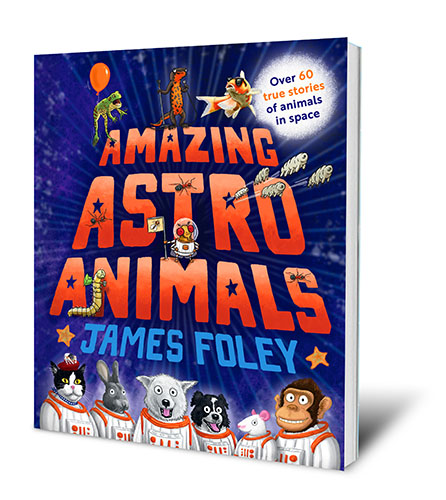
Born out of my research for Stellarphant, this is a true history of animals involved in space travel.
Before humans ever left the planet, animals boldly went where no man had gone before. Even now, these unwitting test pilots and space travellers outnumber their human counterparts.
From microscopic tardigrades to a pregnant cockroach, from last-minute mutts to unhatched chicken eggs, these animals and their stories are weird, wacky and wonderful. Chock-full of extraordinary facts and fun, this is an absolute must read!
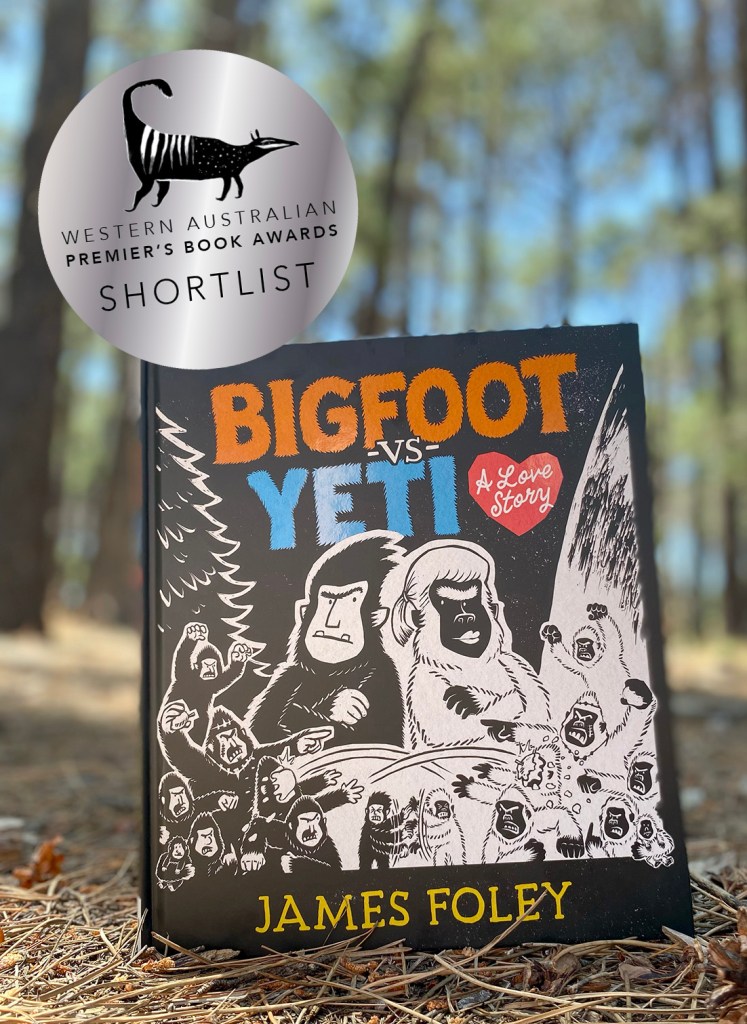
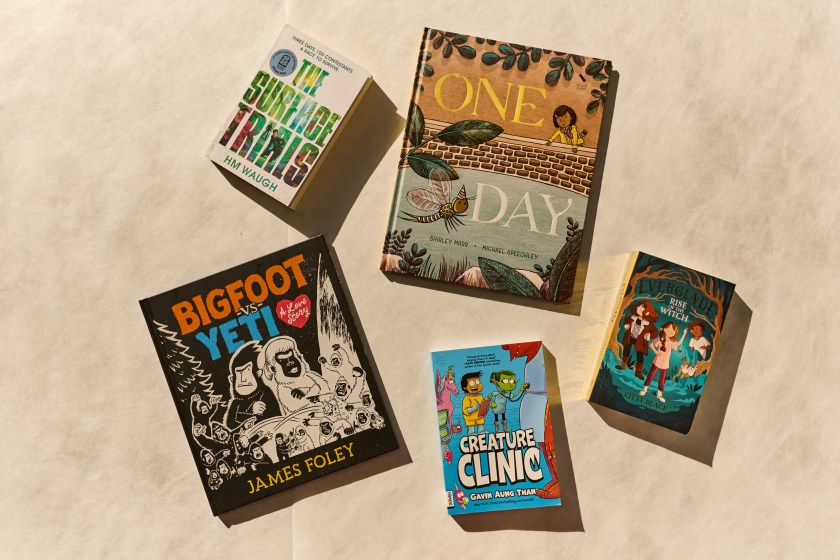
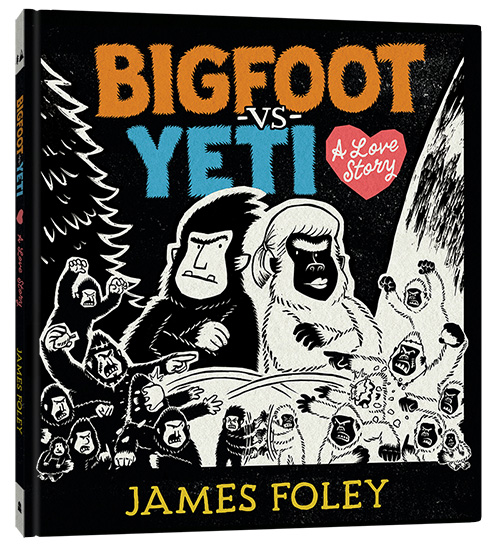
My picture book BIGFOOT VS YETI is on the WA Premier’s Book Awards shortlist! Congrats to the other shortlistees in the Children’s Book of the Year category:
Creature Clinic by Gavin Aung Than
Everglade 1: Rise of the Witch by Kitty Black
One Day by Shirley Marr and Michael Speechley
The Surface Trials by H.M. Waugh And congrats to all the other shortlistees! Western Australia is overflowing with local talent. Thank you to the judges and the State Library of WA for holding the awards.
Hi everyone! I’ve got a kid’s drawing workshop coming up in the second week of the July school holidays.
Tickets go on sale tomorrow (June 30th) at 9pm. Details below.
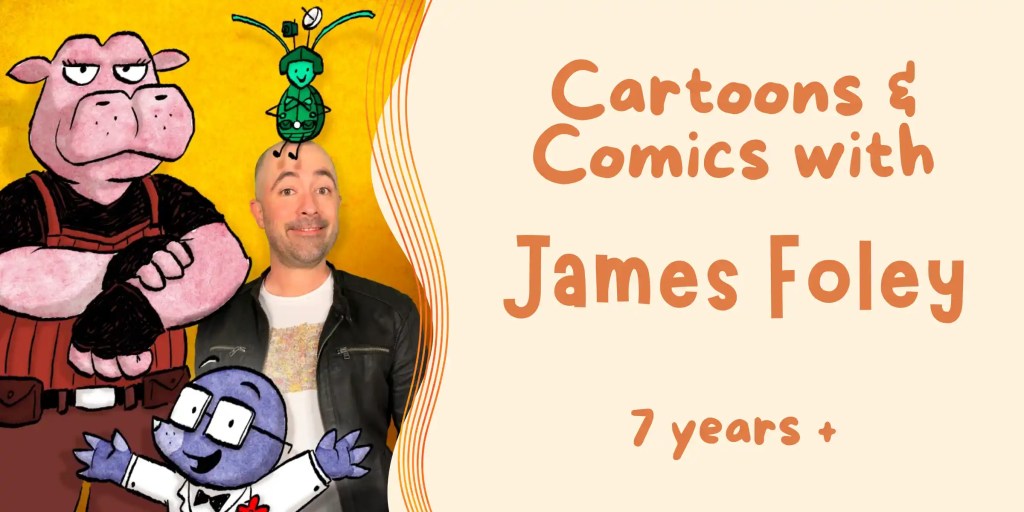
7 July – CARTOONS AND COMICS WORKSHOP (for kids)
Dive into the exciting world of comics and cartooning with illustrator James Foley as you learn how to bring your ideas to life on the page!
In this fun and interactive workshop, participants will explore the fundamentals of cartoon drawing and comics-making, from creating expressive characters and dynamic poses to designing backgrounds and planning stories. James will guide aspiring artists through facial expressions, speech bubbles, sound effects, comic layout techniques, and all the essential skills needed to start creating their very own comics.
Whether you dream of drawing superheroes, hilarious adventures, or imaginative graphic novels filled with the kind of humour and creativity found in James’s award-winning books, this workshop is the perfect place to spark your imagination and start telling stories through art.
DATE: Tuesday 7th July WHEN: 10am – 11am WHERE: AH Bracks Library, 431 Canning Hwy, Melville WA TICKETS: essential. Available from 9pm AWST, 30/6/26 at Humanitix.
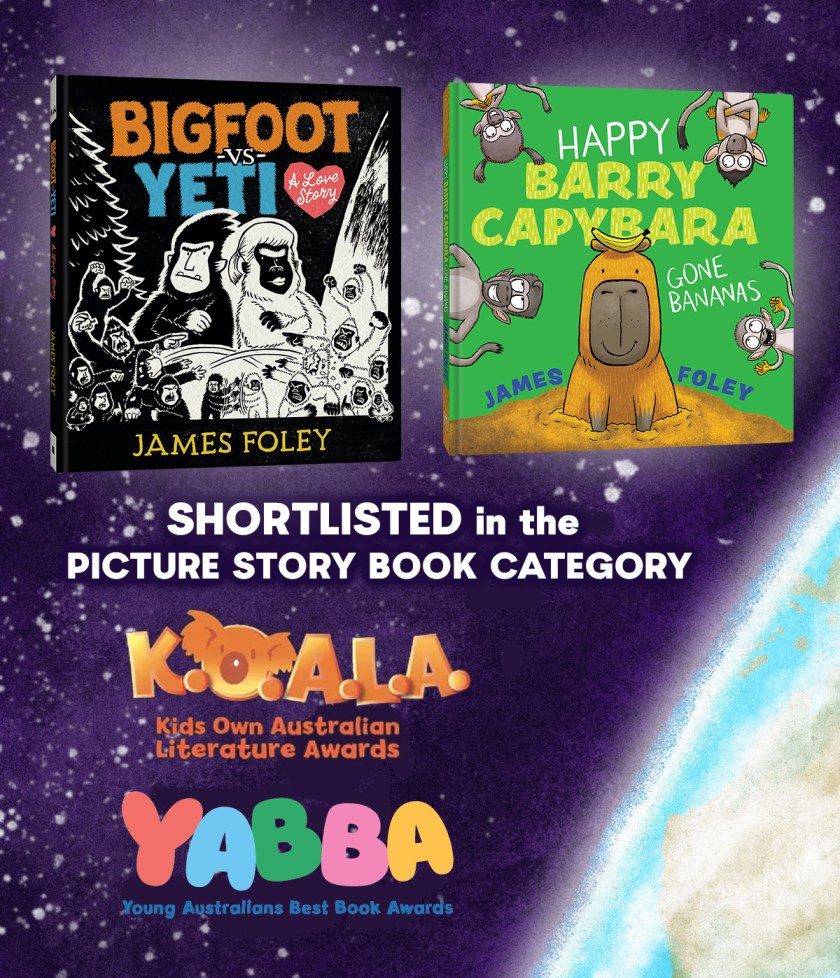
The shortlists for the NSW and Victoria children’s choice book awards – the KOALAS and YABBAS – were released today. I’m stoked to see that two of my books were shortlisted in the Picture Story Book category!
Big thanks to all the young readers who nominated my books for the awards, and to the teachers and librarians who organised voting in their schools!
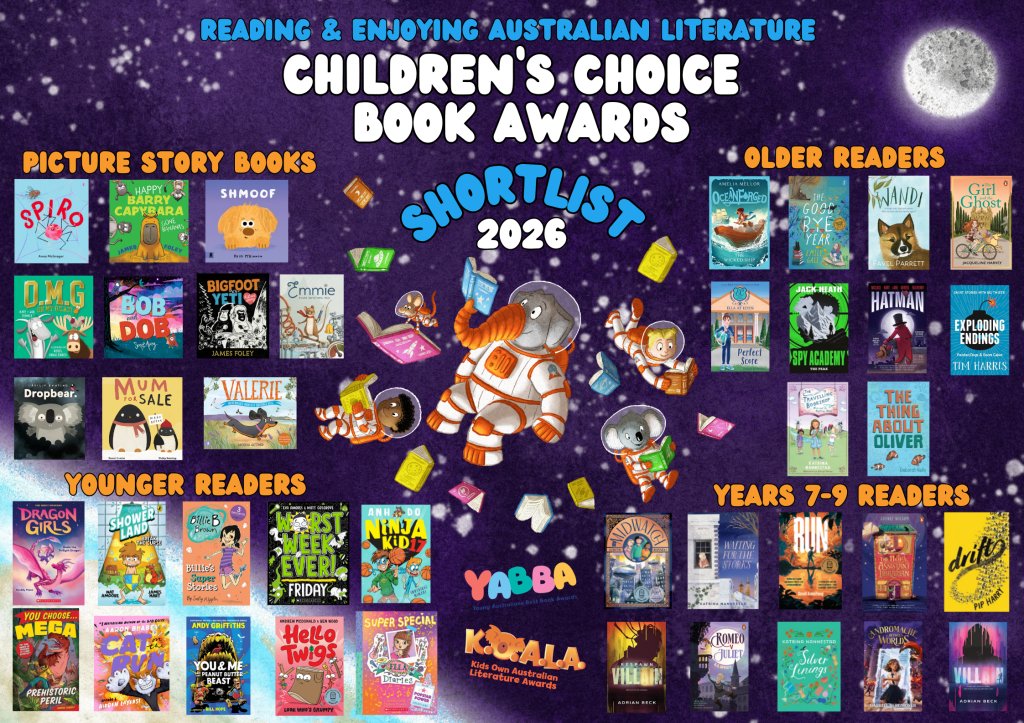
And congrats to everyone with a shortlisted book. There are so many great ones on the list this year. You can see all the shortlisted books in the poster below.
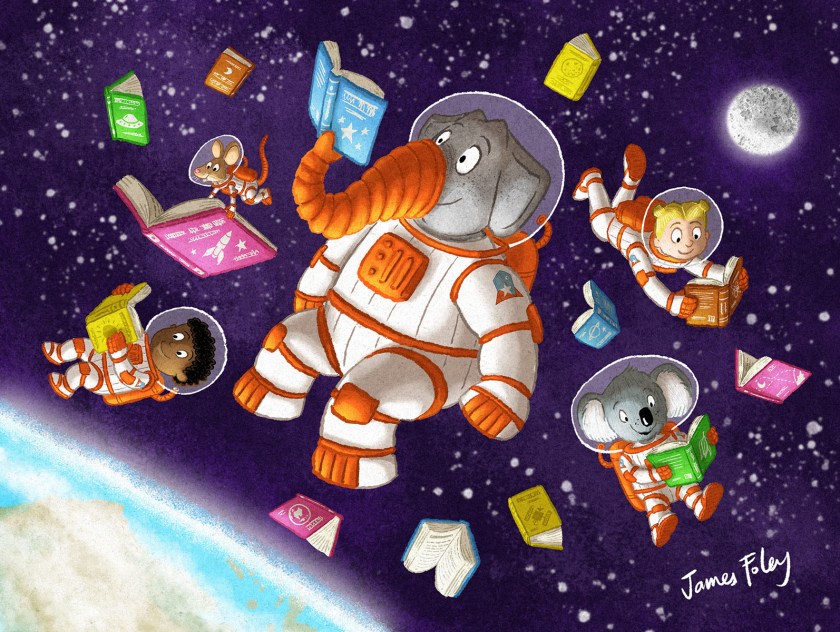
Eagle-eyed viewers will notice that I got to do the artwork for this year’s poster; it was heaps of fun to have Stella from Stellarphant doing a spacewalk with the mascot of the YABBAs (a mouse) and the KOALAs (a koala of course). See below for the full art.



 James Foley